Tuesday, September 14, 2010
Kandahar
We got rocketed last night around 9:30 or so. I never saw or heard anything other than the warning siren that forced you to put your boots back on, trudge through the thick sand-dune dust out to the bunker, wait 20 or 30 minutes for the all clear, and then you got to go back into the quarters. This was among the least uncomfortable aspects of the day.

Mountains on the Way to Kandahar


The striking thing is how extraordinarily narrow the slice of habitation and cultivation is amid the expense of the mountainous barrenness. Pretty much any direction you fly from Kabul - this time it was southwest - this is what impresses me, and the view is powerful and somehow different every time. I will have more to say about Kandahar in a moment, because I got stuck there for two days.
Saturday, September 11, 2010
Street Views


No need to be profound or verbose here - photos from the car as we were driving around in Mazar. Note the white burqa of the woman on the motorcycle. Blue is Kabul and the south, black chador is when you're close to the Iranian border, white is typical of north of the Hindu Kush.
Friday, September 10, 2010
Cracks


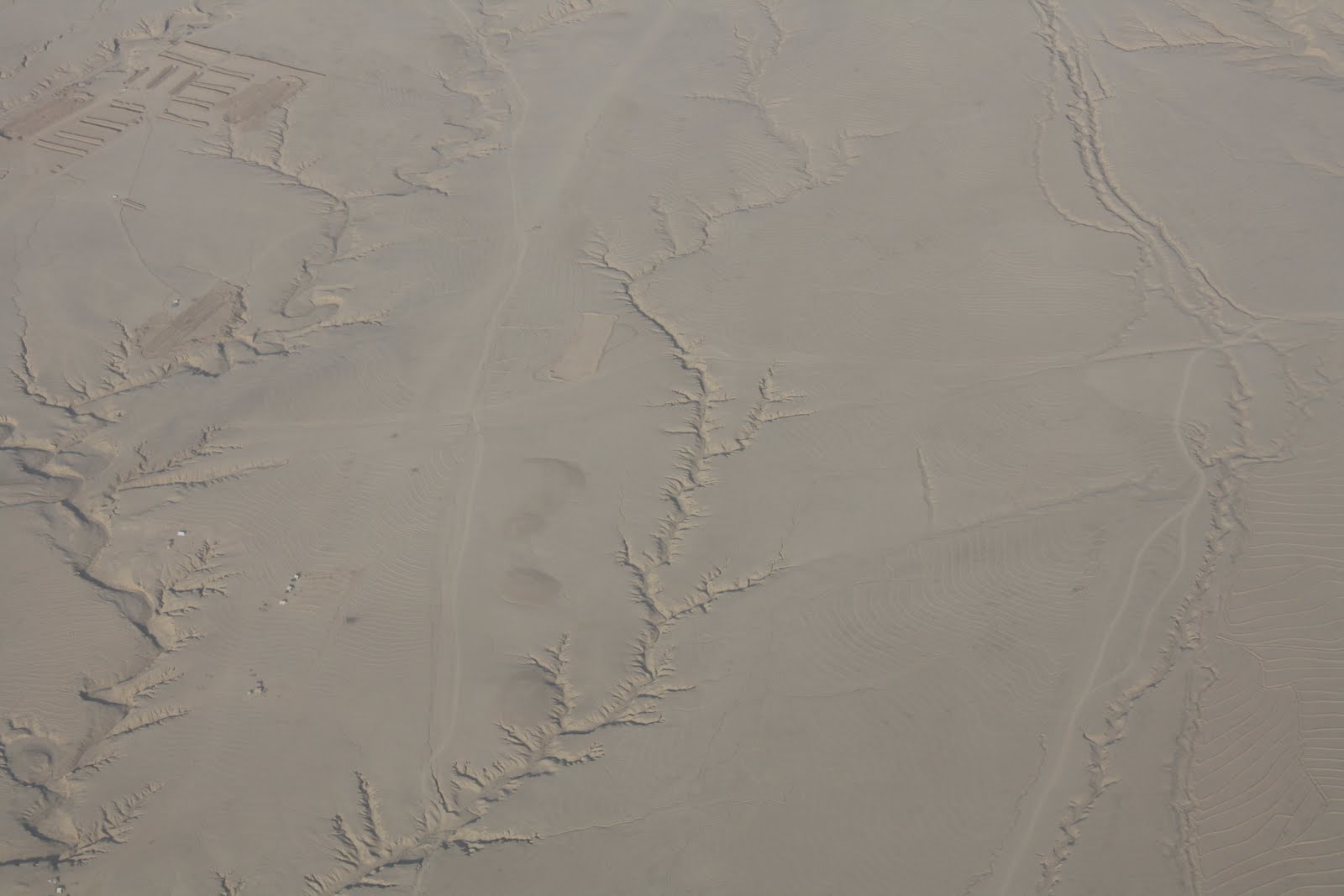 It is a very dry land. Narrow strips with vegetation and a village are swallowed up in vast stretching dry dusty baked landscapes. And usually even where there is a village, the great cracks in the earth come right up to the houses, sometimes overtaking the houses. These are not river valleys or ravines or gullies where the rain runoff goes - there isn't any rain here. These are places where the land is so clay-baked dry that it cracks.
Graffiti


There is graffiti to be found and analyzed. The first two are pretty much self-explanatory, so I'll just let you read them yourselves. The third might be confusing unless I explain. Where it says "Long Live Amireca," the writer meant to spell "America." The Dari has no misspellings, so no need to clarify.
Buzkashi


Blue Mosque in Mazar-e-Sharif


Subscribe to:
Posts (Atom)